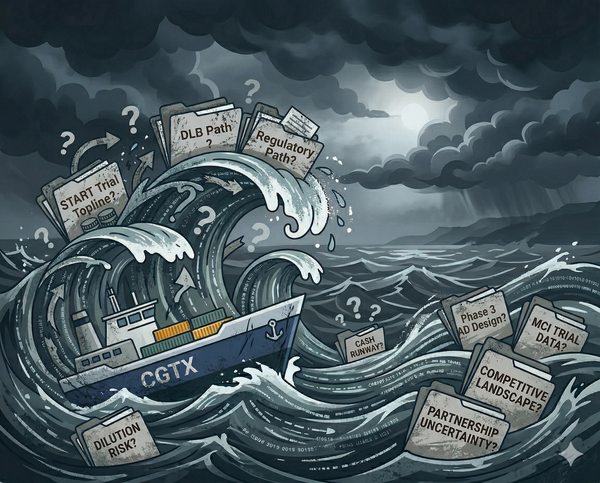
BIOTECH CATALYST AI SCANNER — April WK3

AACR (April 17–22) and AAN (April 19–21) are running simultaneously this week, flooding the conference circuit with data across oncology and neurology. It's a dense period for catalyst traders: nine entries in this issue have events between April 17 and April 22, with the remaining catalysts spread through mid-May. The setup mix skews toward conference presentations and interim reads rather than pivotal topline data — important context when reading the risk sections below.
CAR-T in autoimmune disease is getting its first real public stress test this week. KYTX presents Phase 2 MG updates at AAN on April 20, and CABA delivers first-in-human RESET-MG data the same afternoon — creating a direct, real-time comparison between two CD19 CAR-T programs in the same indication. Meanwhile, ALLO heads into an April efficacy analysis in LBCL with the first allogeneic CAR-T pivotal read. The next two weeks will do a lot to define whether the CAR-T-in-autoimmune thesis holds at scale.
Cash dynamics stand out sharply in this week's scan. Several featured names carry runway measured in weeks, not months. Three names — BIVI, BCYC, and ACRV — trade at or below their net cash, meaning the market is paying nothing for the clinical pipeline. For the binary pressure setups, the tension is real: the data window and the financing window are the same window.
What We're Tracking:
- Trading Below Cash: BIVI, BCYC, ACRV
- Cash Pressure: JAGX, PSTV, BIVI, RLAY, CRVO, COCP, GNPX, CABA
- Initial Data: BIVI, RLAY
- Multi-Catalyst: KYTX, AGEN, ACRV, ADAG
#1. JAGX — Jaguar Health Inc.
FINANCIAL SNAPSHOT 📊 Price: $0.40 | Cap: $5.2M | Cash: $2M | Runway: 2.6 months | Float: 13.0M | RSI: 41.2 | Momentum: -15.3% | Vol: 3.1x
🎯 THE CATALYST 🎯 Event: Crofelemer — Phase 2 Conference Presentation in Short Bowel Syndrome with Intestinal Failure (SBS-IF) 📅 Date: May 05, 2026 🛡️ ODD ⭐ BSI: 8.17/10
Crofelemer blocks CFTR and calcium-activated chloride channels in the gut lining, cutting the secretory fluid losses that force SBS-IF patients onto parenteral nutrition. It targets hypersecretion directly — a different mechanism entirely from teduglutide, which promotes intestinal adaptation over months via GLP-2 signaling.
The Setup: Takeda's teduglutide (Gattex) sets the standard of care at 20–30% parenteral support responders, and Ironwood's apraglutide is racing through Phase 3. Neither is an antisecretory. Crofelemer's pediatric investigator-led POC already showed 12.5–15.6% parenteral support reductions in SBS-IF patients, with up to 27% TPN reduction in MVID — signals that consensus has completely dismissed. The ongoing adult trial (NCT06904872) deliberately excludes colon-in-continuity cases, targeting the pure secretory phenotype where GLP-2 analogs fail. Nearing the end of cash runway and a micro float, a confirmatory adult signal has nowhere to hide.
Science & Edge: Crofelemer normalizes Cl⁻ efflux by simultaneously inhibiting CFTR and CaCC channels at the intestinal mucosa, reducing secretory fluid loss without impairing motility or absorption. Pediatric POC (approximately N=10 MVID/SBS-IF): up to 27% TPN reduction in MVID, 12.5–15.6% parenteral support cut in SBS-IF. The adult NCT06904872 design focuses specifically on patients without colon-in-continuity — where secretion, not adaptation, drives ongoing parenteral dependence.
The Edge: No program in Phase 2 or later directly targets chloride hypersecretion in SBS-IF. Apraglutide and teduglutide both work via intestinal trophic effects — mechanistically upstream and slower. Orphan Drug Designation is already secured, and oral administration contrasts with teduglutide's daily subcutaneous injections in a chronically ill population.
The Risk: 2.6-month runway mean dilution is structurally unavoidable before any data is in hand. Adult cohort size is likely under 10 with no placebo control, making statistical interpretation difficult. The FDA has no prior template for chloride-channel inhibitors in SBS-IF, creating endpoint uncertainty even in a clearly positive scenario.
#2. PSTV — PLUS THERAPEUTICS Inc.
FINANCIAL SNAPSHOT 📊 Price: $3.17 | Cap: $21.8M | Cash: $16.7M | Runway: 7.9 months | Float: 6.9M | RSI: 17.3 | Momentum: -57.7% | Vol: 3.1x
🎯 THE CATALYST Event: CNSide (FORESEE) — Phase 1 Conference Presentation in Breast/NSCLC with Leptomeningeal Metastases 📅 Date: May 17, 2026 ⭐ BSI: 7.91/10
CNSide is a microfluidic platform that captures and molecularly profiles circulating tumor cells directly from CSF. Standard cytology catches roughly 1 in 3 leptomeningeal metastasis cases; CNSide detected LM with 80% sensitivity in FORESEE — and identified actionable mutations in nearly a quarter of those patients.
The Setup: RSI at 17 after a -58% decline in 21 days. The selloff reads as irrational against the fundamentals: FORESEE hit its primary endpoint (90%+ treatment decision influence versus a 20% target), over 11,000 tests have been run, and Highmark and UHC have extended coverage. The upcoming ISPOR presentation adds a health economics argument that models 40% cost savings in LM management versus standard cytology — a payer pitch that's been absent from the data story until now. The Guardant Health re-rating to multi-hundred-million cap on diagnostic proof-of-utility is the relevant structural analog. The bear case is payer inertia — cytology is free and deeply embedded in oncology workflow.
Science & Edge: Microfluidic multi-antibody capture isolates tumor cells from CSF for immunofluorescence quantification and NGS profiling. FORESEE (prospective, N=39 breast/NSCLC patients with suspected LM) influenced over 90% of treatment decisions, detected LM with 80% sensitivity versus 29% for cytology, and identified actionable mutations in 24% of cases. Real-world adoption spans over 11,000 cumulative tests across participating centers, with an AMA PLA code now enabling national reimbursement tracking.
The Edge: No commercial competitor exists in CSF-based CTC detection — MRI and cytology define the current standard, both with diagnostic gaps at early or subtle LM. The ISPOR cost-effectiveness model arrives at a moment when Highmark and UHC coverage is already converting. CNSide's serial monitoring capability after initial LM diagnosis is a clinical utility that neither imaging nor cytology can provide.
The Risk: Eleven thousand tests over six years reflects a commercial ramp that cost data alone may not accelerate. FORESEE's observational design hit the primary utility endpoint but lacks the randomized structure that Medicare and Medicaid coverage decisions typically require — and cytology's incumbent free status creates a reimbursement ceiling even with demonstrated superior sensitivity.
#3. SRPT — Sarepta Therapeutics Inc.
FINANCIAL SNAPSHOT 📊 Price: $21.90 | Cap: $2.30B | Cash: $1.08B | Runway: 24.8 months | Float: 105.0M | RSI: 64.1 | Momentum: +24.0% | Vol: 0.9x
🎯 THE CATALYST Event: AMONDYS 45 (casimersen) and VYONDYS 53 (golodirsen) — sNDA Submission in Duchenne Muscular Dystrophy 📅 Date: Apr 2026 (Est.) ⭐ BSI: 7.81/10
Casimersen and golodirsen are second-generation morpholino oligomers that skip exons 45 and 53 in the dystrophin gene, restoring partial reading-frame function. They produce approximately 0.69% normal dystrophin levels by Western blot — more than double eteplirsen's 0.3% — in patients representing roughly 13% and 8% of the DMD mutation spectrum, respectively.
The Setup: Sarepta leads the DMD exon-skipping franchise with three approved PMOs versus NS Pharma's single Viltepso on exon 53. ESSENCE Phase 3 missed its primary endpoint (p=0.309 at 96 weeks), but the FDA explicitly requested this sNDA filing — and that distinction matters. The confirmatory case rests on real-world evidence: a 7.5-year ventilation delay for golodirsen patients and 25% slower lung function decline for casimersen versus untreated natural history cohorts. No approved therapy covers exon 45, and the consensus view has already embedded the ESSENCE miss. What it hasn't priced is FDA willingness to accept RWE as a confirmatory backbone in a lethal pediatric disease with no alternatives.
Science & Edge: ESSENCE Phase 3 (N=225 ambulatory boys aged 6–13, 148 PMO/77 placebo): 4-step ascend velocity at week 96 showed +0.06 steps/s LSM difference (p=0.309). Post-hoc analysis excluding 23 COVID-impacted patients reached +0.12 steps/s (p=0.050). Dystrophin restoration: 0.69% normal by Western blot (95% CI 0.28–1.10, p<0.001). Real-world evidence shows golodirsen associated with 7.5-year delay to ventilation and casimersen with 25% slower lung function decline versus untreated cohorts.
The Edge: FDA's explicit endorsement of the sNDA filing — despite a primary endpoint miss — distinguishes this from a company pushing against regulatory headwinds. No exon 45 therapy exists anywhere in the DMD landscape. Casimersen and golodirsen together address approximately 21% of the addressable DMD mutation spectrum, with RWE supporting durable benefit across multiple functional domains.
The Risk: FDA's DMD confirmatory precedent is unforgiving — Elevidys received multiple CRLs before approval, and the ESSENCE post-hoc COVID exclusion (which pushed p to 0.050) is methodologically distinct from the primary analysis. If the agency determines that RWE without a randomized comparison is insufficient, it could require a new adequately powered trial on a timeline that competes with Elevidys gene therapy cannibalizing the PMO market from within.
#4. BIVI — BioVie Inc.
FINANCIAL SNAPSHOT 📊 Price: $1.49 | Cap: $11.2M | Cash: $15.7M | Runway: 10.6 months | Float: 7.5M | RSI: 55.3 | Momentum: +8.8% | Vol: 0.6x
🎯 THE CATALYST Event: Bezisterim (NE3107) (SUNRISE-PD) — Phase 2 Conference Presentation in Parkinson's Disease 📅 Date: May 17, 2026 ⭐ BSI: 7.46/10
Bezisterim is an oral, brain-penetrant molecule that selectively inhibits ERK- and NF-κB-driven neuroinflammatory cytokines while improving insulin signaling. In Parkinson's, it addresses progression pathways that levodopa doesn't touch — neuroinflammation and insulin resistance — rather than supplementing the dopamine deficit that defines symptomatic therapy.
The Setup: Cash exceeds market cap, which means the Street is pricing bezisterim's pipeline at zero. That misread ignores a Phase 2a signal that holds up under scrutiny: approximately 5-point MDS-UPDRS Part III advantage over levodopa add-on, and 33% of under-70 patients achieving morning ON versus 0% in the levodopa-only arm (p=0.02). Roche's prasinezumab is chasing alpha-synuclein in Phase 3; Annovis's buntanetap is in PADIGMA — but neither targets the ERK/NF-κB inflammatory axis in dopamine-naïve patients. SUNRISE-PD enrolled 60 early PD patients under a hybrid decentralized design in under a year, addressing one of PD trials' most persistent bottlenecks.
Science & Edge: Bezisterim inhibits ERK/NF-κB to reduce TNF-α and related neuroinflammatory cytokines while improving insulin sensitivity. Phase 2a in moderate PD on levodopa (approximately N=40): NE3107 arm showed approximately 5-point MDS-UPDRS Part III advantage and 33% morning ON status versus 0% placebo (p=0.02). NMSS sleep/fatigue: -2.4 points versus +1.0 worsening in placebo. SUNRISE-PD targets dopamine-naïve early PD patients with centralized MDS-UPDRS Part III ratings to test disease modification rather than symptomatic augmentation.
The Edge: No approved disease-modifying therapy exists for Parkinson's. SUNRISE-PD's hybrid decentralized design with centralized rating addresses the mobility and geography barriers that have derailed prior PD trials, and FDA alignment on the design was obtained pre-trial — a procedural signal that the endpoint framework is acceptable. The Phase 2a morning ON data (p=0.02) in a levodopa-treated population is a harder signal to wave away than it's been treated.
The Risk: N=60 in a decentralized design with no prior disease-modification approval precedent for any PD drug is a difficult regulatory submission even on a clean primary read. The MDS-UPDRS III endpoint has produced reproducibility failures in prior Phase 2 PD programs at similar scale — including programs with better-funded sponsors — and the bear case on bezisterim is that the ERK/NF-κB mechanism remains mechanistically novel without validated surrogate markers linking it to long-term neuronal preservation.
#5. KYTX — Kyverna Therapeutics Inc.
FINANCIAL SNAPSHOT 📊 Price: $9.22 | Cap: $557.3M | Cash: $242.4M | Runway: 21.7 months | Float: 60.4M | RSI: 59.4 | Momentum: -0.1% | Vol: 1.3x
🎯 THE CATALYST Event: Miv-cel (mivocabtagene autoleucel, KYV-101) (KYSA-6) — Phase 2 Interim Data in Myasthenia Gravis 📅 Date: Apr 20, 2026 🛡️ FTD, ODD, RMAT Additional catalysts: 1 more within 90 days ⭐ BSI: 7.44/10
KYV-101 engineers a patient's own T cells to carry a fully human anti-CD19 CAR, eliminating the autoreactive B cells that produce acetylcholine receptor antibodies in generalized MG. The ambition is deep remission — not chronic symptom palliation — contrasting FcRn inhibitors like efgartigimod and complement blockers like ravulizumab, which require biweekly to monthly infusions indefinitely.
The Setup: Tomorrow, Kyverna and Cabaletta both present autoimmune CAR-T data in MG at AAN — creating the first head-to-head read on competing programs in the same indication on the same afternoon. KYSA-6 Phase 2 interim in October 2025 showed 100% of patients (n=6) achieving clinically meaningful MG-ADL and QMG improvements at week 24, mean reductions of -8.0 and -7.7 points — roughly double efgartigimod's benchmark of -3 to -4 points. Phase 3 already dosed its first patient in December 2025 with 14 active sites. Tomorrow's AAN data extends the AANEM read and likely updates durability beyond 24 weeks. The SPS BLA filing is due in 1H 2026.
Science & Edge: KYSA-6 Phase 2 interim (n=6 refractory gMG): 100% achieved clinically meaningful MG-ADL and QMG improvement at week 24, mean reductions of -8.0 and -7.7 points respectively. All patients came off chronic immunosuppression — IVIG, steroids, FcRn inhibitors, complement inhibitors. No Grade 3+ CRS or ICANS. MGC mean improved -12 points; 2 of 3 assessed patients reached minimal symptom expression.
The Edge: FTD, ODD, and RMAT designations in a single indication simultaneously reflects the FDA's view of this as a priority program. The off-drug status in all 6 MG patients at 24 weeks — off every class of chronic immunosuppression — has no equivalent in the approved FcRn/complement inhibitor landscape. If the Phase 2 update tomorrow extends that durability signal past 24 weeks, the Phase 3 BLA trajectory becomes clearer.
The Risk: Autologous CAR-T at a roughly $800K–$1M price point requires specialized manufacturing and center infrastructure. The KYSA-6 Phase 3 has 14 sites actively enrolling — a foundation, but refractory gMG patients are hard to accrue at scale, and autologous manufacturing variability remains a real execution risk beyond academic medical centers. Cabaletta's CABA-201 data this afternoon provides a real-time comparison that the market will use to price relative positioning.
#6. ALLO — Allogene Therapeutics Inc.
📊 FINANCIAL SNAPSHOT 📊 Price: $2.70 | Cap: $658.2M | Cash: $219.9M | Runway: 23.9 months | Float: 243.8M | RSI: 64.9 | Momentum: -0.4% | Vol: 0.6x
🎯 THE CATALYST Event: Cemacabtagene ansegedleucel (cema-cel) (ALPHA3) — Phase 2 Interim Data in Large B-Cell Lymphoma 📅 Date: Apr 2026 (Est.) ⭐ BSI: 7.43/10
Cema-cel delivers TALEN-edited allogeneic CD19 CAR T cells with TCR and CD52 knockouts, enabling off-the-shelf administration without patient-specific manufacturing. Instead of the weeks-long delay for autologous CAR-T production, cema-cel can reach patients within days of the treatment decision.
The Setup: ALPHA3 is the first allogeneic CAR-T program to reach a pivotal efficacy analysis in LBCL — testing MRD clearance as a consolidation strategy after frontline R-CHOP. Against autologous rivals Yescarta and Breyanzi, approved in 2L/3L relapsed disease, cema-cel is pushing into a space where no CAR-T of any kind has been approved. Phase 1 ALPHA/ALPHA2 (N=33 CD19-naïve r/r LBCL) showed 67%/58% ORR on the pivotal regimen — and 100% CR in the low-burden (<1,000mm²) population that ALPHA3 specifically enrolls. Futility threshold is 25–30% MRD conversion. Binary: pass unlocks BLA path, fail closes the allogeneic 1L LBCL program.
Science & Edge: TALEN genome editing removes TCR (rejection resistance) and CD52 (enabling FC conditioning) while expressing a CD19 CAR from healthy donor T cells. Phase 1 ORR 58% overall, 42% complete response; 67%/58% on pivotal regimen; median duration of response 23.1 months in complete responders. No Grade 3+ CRS or ICANS. Phase 1 showed 100% CR in the low-burden LBCL population that ALPHA3 is designed around.
The Edge: No allogeneic CAR-T has been approved anywhere in any indication. A validated pivotal efficacy signal for cema-cel in LBCL would de-risk the entire off-the-shelf CAR-T manufacturing model — a platform advantage that autologous programs structurally cannot replicate. The Phase 1 100% CR rate in low-burden patients is the direct precedent for what ALPHA3 needs to demonstrate.
The Risk: PhasED-Seq MRD in 1L LBCL consolidation has no FDA approval precedent — the agency will need to map MRD clearance to an established clinical outcome, and that mapping hasn't been defined. If natural MRD clearance in the observation arm runs higher than modeled, the ALPHA3 treatment effect compresses toward futility even without a drug-related failure.
#7. RLAY — Relay Therapeutics Inc.
📊 FINANCIAL SNAPSHOT 📊 Price: $14.51 | Cap: $2.59B | Cash: $34.7M | Runway: 2.3 months | Float: 178.7M | RSI: 80.9 | Momentum: +35.7% | Vol: 2.0x
🎯 THE CATALYST Event: Zovegalisib (RLY-2608) + fulvestrant + ribociclib (ReDiscover-2) — Phase 3 Conference Presentation in PIK3CA-Mutant HR+/HER2- Breast Cancer 📅 Date: May 20, 2026 🛡️ BTD ⭐ BSI: 7.28/10
Zovegalisib targets all major oncogenic PIK3CA mutations allosterically, sparing wild-type PI3Kα to avoid the severe hyperglycemia that limits alpelisib to heavily selected patients. Fed BID dosing without fasting requirements improves tolerability relative to the prior class standard.
The Setup: RSI at 81, up 36% in three weeks — the stock is riding the March 2026 Phase 1/2 ReDiscover data, which showed an 11.1-month mPFS in heavily pre-treated PIK3CA-mutated HR+/HER2- mBC post-CDK4/6 inhibitor. AstraZeneca's capivasertib hit 7.2 months in a comparable population in CAPItello-291 — that's the head-to-head target for the ongoing Phase 3 ReDiscover-2. Breakthrough Therapy Designation anchors the regulatory timeline. The May 20 ISSVA conference data covers zovegalisib in PIK3CA-driven vascular anomalies — a mechanistically important read on whether the allosteric MoA extends beyond oncology. The 2.3-month cash position means refinancing will happen regardless of what ISSVA shows.
Science & Edge: Allosteric pan-mutant PI3Kα inhibitor with minimal wild-type activity. ReDiscover Phase 1/2 at Phase 3 dose (400mg BID fed, n=57 efficacy-evaluable, post-CDK4/6i): mPFS 11.1 months (95% CI 7.3–13.0), ORR 43% (15/35 patients with measurable lesions). Grade 1/2 hyperglycemia dominant; only 4 of 60 patients discontinued. Phase 3 ReDiscover-2 tests the identical 400mg BID fed dose directly versus capivasertib + fulvestrant.
The Edge: Phase 1/2 mPFS of 11.1 months versus capivasertib's CAPItello-291 benchmark of 7.2 months, with a dramatically cleaner metabolic profile — no Grade 3+ hyperglycemia requiring the REMS program that limits alpelisib prescribing. BTD designation aligns the ReDiscover-2 design directly against the approved standard, setting up an explicit superiority bar on efficacy and tolerability simultaneously.
The Risk: The May 20 ISSVA vascular anomaly data is a conference presentation, not a ReDiscover-2 interim — it can't confirm or deny Phase 3 efficacy, but it can set the directional narrative. If that data disappoints on mechanism, momentum reverses before the Phase 3 can speak. Meanwhile, 2.3 months of cash means a dilutive raise is imminent regardless of ISSVA outcome, and the current RSI 81 pricing leaves little room for execution delay.
#8. CRVO — CervoMed Inc.
📊 FINANCIAL SNAPSHOT 📊 Price: $4.04 | Cap: $37.4M | Cash: $13.6M | Runway: 6.2 months | Float: 9.3M | RSI: 44.7 | Momentum: -16.9% | Vol: 0.6x
🎯 THE CATALYST Event: Neflamapimod (RewinD-LB) — Phase 2 Conference Presentation in Dementia with Lewy Bodies 📅 Date: Apr 22, 2026 🛡️ ODD ⭐ BSI: 7.25/10
Neflamapimod selectively inhibits p38 MAPKα in cholinergic neurons, reversing the endosomal trafficking dysfunction that drives synaptic loss in DLB. It targets basal forebrain degeneration specifically — the pathology underlying DLB cognitive decline — rather than providing the transient acetylcholine boost that cholinesterase inhibitors like donepezil offer.
The Setup: The full Phase 2b trial missed its primary endpoint. What the market has priced in but hasn't fully parsed: the miss wasn't a drug failure — it was an exposure failure. Batch B formulation achieved therapeutic Ctrough ≥4 ng/mL in 75% of patients versus 50% for Batch A. In the low-pTau181 subgroup (<21 pg/mL, pure DLB) where Batch B drove the signal, CDR-SB improved -1.11 points versus placebo (p=0.005, N=21 subgroup), CGIC -0.82 (p=0.004). The AAN poster on April 22 tests whether MRI imaging confirms that mechanistic story — basal forebrain protection mirroring the CDR-SB signal. No approved disease-modifying therapy exists for DLB; ACADIA's Nuplazid addresses psychosis, not cognition. Six months of cash means this poster needs to attract Phase 3 financing in a narrow window.
Science & Edge: Neflamapimod blocks p38 MAPKα to restore synaptic function via reduced Rab5-GTP and normalized endosomal trafficking in alpha-synuclein-burdened neurons. RewinD-LB Phase 2b (N=159, 16-week DBPC): low-pTau181 subgroup (N=21 pure DLB, Batch B-enriched) hit CDR-SB -1.11 vs placebo (p=0.005), CGIC -0.82 (p=0.004). The Batch B formulation correction — from 50% to 75% hitting therapeutic Ctrough — provides a pharmacokinetic explanation for the topline miss that is mechanistically coherent and technically addressable in Phase 3.
The Edge: The Batch B formulation discovery isn't spin — it's a pharmacological explanation that sets up a Phase 3 with defined patient enrichment (pTau181 <21 pg/mL) and confirmed formulation. Competitors CT1812 (Cognition Therapeutics) and buntanetap (Annovis) don't have a p38 MAPKα mechanism or a basal forebrain imaging rationale. First-mover advantage in a DLB-specific disease-modification Phase 3 is real in a field where nobody has gotten there yet.
The Risk: The most powerful data in the program comes from a N=21 post-hoc subgroup — a sample size the FDA has consistently scrutinized in neurodegeneration, where subgroup findings have been used to justify full trials and then failed to replicate. Six months of cash means the Phase 3 financing clock starts on April 22 regardless of the poster data, and a field with a long track record of Phase 2 success followed by Phase 3 failure should calibrate enthusiasm accordingly.
#9. NUVB — Nuvation Bio Inc.
📊 FINANCIAL SNAPSHOT 📊 Price: $4.53 | Cap: $1.57B | Cash: $556.5M | Runway: 56.2 months | Float: 347.6M | RSI: 58.6 | Momentum: -3.4% | Vol: 0.7x
🎯 THE CATALYST Event: Taletrectinib (TRUST-I, China) — Phase 2 Conference Presentation in ROS1+ NSCLC 📅 Date: Apr 21, 2026 🛡️ BTD, ODD ⭐ BSI: 7.25/10
Taletrectinib inhibits wild-type ROS1 and resistance mutations including G2032R (IC50 0.4 nM), which entrectinib cannot clear at therapeutic concentrations. It delivers high intracranial response rates in a cancer where 30–40% of ROS1+ patients develop brain metastases — and where most first-generation TKIs have limited CNS penetration.
The Setup: IBTROZI earned FDA approval in June 2025 and is commercially active, with 432 new patient starts reported by year-end 2025. The stock trades at roughly cash value, pricing the commercial ramp at zero. A 50-month median DOR in TKI-naïve patients — previewed ahead of tomorrow's AACR TRUST-I read — is nearly double entrectinib's published median, and it's the number that defines long-term 1L competitive positioning. Repotrectinib (BMS/Turning Point) holds NCCN 1L status but has limited activity post-entrectinib due to shared resistance variants — a gap taletrectinib's G2032R potency fills. Tomorrow's AACR data covers the Chinese TRUST-I cohort and extended durability outcomes.
Science & Edge: Taletrectinib shows potent and selective ROS1 kinase inhibition with G2032R coverage (IC50 0.4 nM versus entrectinib's >1,000 nM). TRUST-II Phase 2 (n=106): ORR 91% TKI-naïve (n=55, 95% CI 80–98), 66% TKI-pretreated (n=32, 95% CI 47–82); mPFS 29.4 months / 15.5 months respectively. Intracranial ORR 92%. ESMO 2025 confirmed 89%/56% ORR with 50-month mDOR in naïve patients.
The Edge: The 50-month mDOR in TKI-naïve patients substantially exceeds entrectinib's published results, and the G2032R potency creates genuine 2L activity in patients who progress on entrectinib or crizotinib. BTD and ODD are on file; EMA MAA was validated in March 2026 — the regulatory infrastructure for a global launch is in place.
The Risk: The 432 patient starts through year-end 2025 tracks below aggressive consensus projections, and repotrectinib's established NCCN 1L position creates a real penetration ceiling in treatment-naïve patients unless taletrectinib earns its own 1L NCCN recommendation from this data body. Post-repotrectinib activity has not yet been demonstrated — the 2L positioning may be narrower than the G2032R data suggests.
#10. WVE — Wave Life Sciences Ltd.
📊 FINANCIAL SNAPSHOT 📊 Price: $7.10 | Cap: $1.34B | Cash: $564.9M | Runway: 50.2 months | Float: 188.3M | RSI: 25.1 | Momentum: -48.4% | Vol: 0.6x
🎯 THE CATALYST Event: WVE-006 (RestorAATion-2) — Phase 1/2 Interim Data in PiZZ AATD at ATS 📅 Date: May 18, 2026 ⭐ BSI: 7.23/10
WVE-006 uses GalNAc-delivered ADAR-mediated RNA editing to correct the SERPINA1 Z-mutation directly in liver mRNA, shifting hepatocyte output from aggregation-prone Z-AAT toward functional wild-type M-AAT. It addresses both the lung disease (insufficient protective AAT) and the liver pathology (toxic Z-protein aggregate accumulation) — simultaneously and without cutting the genome.
The Setup: RSI at 25 following a -48% decline in three weeks, against 50 months of cash runway. Wave lost GSK's collaboration on this program, and the market treated that as a clinical verdict. The data says otherwise. The 200mg multidose cohort (q2w x7, n=8) produced mean peak total AAT of 11.9µM and M-AAT of 7.2µM — p=0.012 versus single dose — with effects durable more than two months after the last injection. Beam Therapeutics' BEAM-302 base-editing program showed 16.1µM steady-state total AAT at 60mg IV from March 2026, raising the bar. ATS in May presents the 400mg monthly multidose and 600mg single-dose cohorts — the data that the GSK relationship was actually contingent on.
Science & Edge: ADAR-mediated RNA editing converts SERPINA1 Z-mRNA to M-mRNA in hepatocytes without permanent genome alteration. RestorAATion-2 Phase 1b/2a: 200mg multidose (q2w x7, n=8) showed mean peak total AAT 11.9µM, M-AAT 7.2µM (64% of total, p=0.012 vs single dose), Z-AAT reduced 60.3%, effects durable beyond 2 months post-last-dose. 400mg single dose (n=8): 12.8µM total, 5.3µM M-AAT. The 400mg monthly multidose and 600mg single-dose cohorts mature at ATS.
The Edge: M-AAT produced by RNA editing retains full wild-type functionality — structurally distinct from exogenous mixed-pool plasma augmentation (Prolastin, Zemaira), which provides transient partial coverage without addressing the underlying genetic defect or liver pathology. The subcutaneous administration route differentiates from Beam-302's IV delivery in a disease that requires repeat dosing over years. Prior 200mg multidose data showed a 50% M-AAT gain over single dose (7.2µM vs 4.8µM, p=0.012), suggesting a dose-response relationship that the 400mg multidose cohort at ATS will test.
The Risk: Beam Therapeutics' March 2026 data showing 16.1µM steady-state total AAT from a single 60mg IV dose has reset the efficacy benchmark in AATD gene/RNA therapy. If WVE-006's 400mg multidose plateau falls below that threshold or requires monthly dosing to maintain it, payers and physicians face a direct efficacy comparison — and a chronic monthly subQ regimen will struggle to compete against a potential one-time IV option in a population of roughly 200,000 diagnosed PiZZ patients where treatment adherence over years is a known barrier.
WATCHLIST
#11. COCP — Cocrystal Pharma Inc. [Infectious Disease]
📊 Price: $1.44 | Cap: $19.9M | Cash: $5.1M | RSI: 68.2 | Momentum: +35.2% 🎯 CDI-988 — Phase 1b Conference Presentation in Norovirus (Apr 27, 2026) 🛡️ FTD ⭐ BSI: 7.20/10
The Intel: CDI-988 is a first-in-class helicase-primase inhibitor targeting norovirus NS1-2 proteins — a mechanism with no approved precedent in a disease where zero antivirals exist. ICAR on April 27 presents the first clinical efficacy read from a challenge study at Emory, which commenced dosing in March 2026. The competitive position is unique: no other helicase inhibitor has reached Phase 1b in norovirus, and the commercial case for an oral antiviral in an indication affecting hundreds of millions annually is straightforward if the mechanism holds. Limited prior clinical evidence is the main uncertainty at this stage — this is first-in-human efficacy data, not a confirmation of a known signal. Cash at 8.7 months and high momentum means any weak clinical signal triggers rapid reassessment.
#12. MIRA — MIRA Pharmaceuticals Inc. [CNS / Pain]
📊 Price: $1.04 | Cap: $43.7M | Cash: $9.7M | RSI: 46.3 | Momentum: -14.8% 🎯 Ketamir-2 — Phase 1 Conference Presentation in Healthy Volunteers/Neuropathic Pain (Apr 17, 2026) ⭐ BSI: 7.17/10
The Intel: Ketamir-2 is an oral ketamine analog engineered with low blood-brain-barrier penetration, targeting peripheral nociception without the psychotomimetic effects that limit ketamine and esketamine to supervised administration settings. Phase 1 dosing completed March 4, 2026, and the AACR April 17 presentation releases full safety and PK data ahead of Phase 2a planning. The non-opioid chronic pain landscape is crowded — Vertex's suzetrigine recently opened a new target class — but peripheral ketamine selectivity is a genuinely different mechanism from either sodium channel blockers or centrally acting agents. Risk at this stage is that the FDA has no existing regulatory framework for peripherally selective ketamine analogs, and Phase 2a endpoint design in neuropathic pain requires careful regulatory alignment before significant capital is committed.
#13. BCYC — Bicycle Therapeutics plc [Oncology]
📊 Price: $4.98 | Cap: $250.3M | Cash: $497.3M | RSI: 56.8 | Momentum: -6.0% 🎯 BT5528 + OPDIVO (nivolumab) — Phase 1/2 Conference Presentation in Solid Tumors (Apr 19, 2026) ⭐ BSI: 7.15/10
The Intel: Cash exceeds market cap — the Street is paying below book for a BTC (Bicycle Toxin Conjugate) platform with published Phase 1/2 data. ESMO 2024 showed a 43% ORR in EphA2+ patients versus 20% in EphA2-negative patients for BT5528 plus nivolumab; AACR April 19 expands that read with a larger cohort. The EphA2 biomarker selection is the key variable: if the EphA2+ ORR holds or improves with more patients, BCYC has a defined patient selection strategy in solid tumors where antibody-drug conjugates like enfortumab vedotin dominate but can't penetrate all tumor compartments. The BTC format — small enough for deep tissue penetration — is the core differentiation from ADCs. Risk is that small-molecule delivery with BTC linkers has less established stability data than antibody-based payloads, and the EphA2 biomarker selection strategy still needs Phase 2 validation.
#14. GNPX — Genprex Inc. [Oncology]
📊 Price: $1.31 | Cap: $11.8M | Cash: $3.3M | RSI: 12.8 | Momentum: -34.5% 🎯 REQORSA + TAGRISSO (osimertinib) (Acclaim-1) — Phase 1/2 Interim Data in NSCLC (Apr 19, 2026) 🛡️ FTD ⭐ BSI: 7.12/10
The Intel: RSI at 12.8, 2.4 months of cash, -34.5% momentum. GNPX is in distress, and the AACRO April 19 Acclaim-1 Phase 2a read needs to simultaneously prove clinical signal and attract financing to survive. REQORSA delivers TERT-silencing nanoparticles alongside osimertinib to attack EGFR-mutated NSCLC via telomerase disruption — mechanistically orthogonal to EGFR inhibition and potentially relevant at acquired resistance. The problem is competitive context: osimertinib combinations are being actively tested by AstraZeneca and partners with substantially greater resources and larger patient databases. At $11.8M cap and 9.0M shares, the float limits institutional participation regardless of data quality. Watch-from-the-sidelines positioning until the cash situation resolves.
#15. CATX — Isoray (DE) [Oncology / Nuclear Medicine]
📊 Price: $4.37 | Cap: $497.9M | Cash: $292.6M | RSI: 39.0 | Momentum: -18.3% 🎯 [²¹²Pb]VMT-α-NET — Phase 1 Conference Presentation in Neuroendocrine Tumors (Apr 20, 2026) ⭐ BSI: 7.11/10
The Intel: [²¹²Pb]VMT-α-NET delivers targeted alpha-particle radiation to SSTR2-positive NETs via somatostatin receptor binding — competing with Lutathera's established beta-emitter standard but with substantially higher linear energy transfer per unit length and a shorter tissue range that spares adjacent normal structures. ASCO-GI in January 2026 showed 39% ORR in Cohort 2 (5.0 mCi) across 56 treated patients with no dose-limiting toxicities regardless of SSTR2 expression level — a favorable tolerability signal at meaningful scale for Phase 1. AACR April 20 updates with Cohort 3 data. Generator-produced ²¹²Pb addresses the supply chain bottleneck that limits actinium-225 programs. The regulatory path requires a randomized Phase 3 versus Lutathera before approval, which is a multi-year and substantial capital commitment even from a position of strong Phase 1 data.
#16. AGEN — Agenus Inc. [Oncology]
📊 Price: $4.20 | Cap: $161.3M | Cash: $79.7M | RSI: 62.8 | Momentum: +24.6% 🎯 AgenT-797 + Botensilimab + Balstilimab — Phase 2 Conference Presentation in PD-1 Refractory GEC (Apr 20, 2026) 📅 Additional catalysts: 1 more within 90 days ⭐ BSI: 7.06/10
The Intel: The triple combination — oncolytic HSV plus Fc-enhanced CTLA-4 plus PD-1 — attacks PD-1 refractory gastroesophageal cancer via viral tumor lysis, Treg depletion, and checkpoint relief simultaneously. AACR presents Phase 2 GEC data alongside Phase 1 preliminary results in 1L MSS colorectal cancer without liver/bone/brain metastases — one of the only settings where immuno-oncology has shown early signal in a classically cold tumor type. Botensilimab's Fc-enhanced design remains the most differentiated piece; other CTLA-4 programs lack its Treg-depleting potency at tolerable doses. The weakness here is catalyst quality: this is ongoing Phase 2 conference data, not a topline readout, which limits how much conclusions can be drawn from whatever the poster shows. Momentum is building, but the data depth doesn't yet support it.
#17. ACRV — Acrivon Therapeutics Inc. [Oncology]
📊 Price: $1.53 | Cap: $59.3M | Cash: $101.8M | RSI: 44.0 | Momentum: -7.8% 🎯 ACR-2316 — Phase 1 Conference Presentation in Solid Tumors (Apr 20, 2026) 📅 Additional catalysts: 1 more within 90 days ⭐ BSI: 7.06/10
The Intel: Cash exceeds market cap by nearly 2x. ACRV's dual WEE1/PKMYT1 inhibitor ACR-2316 forces DNA-damaged cells through the G2/M checkpoint into mitotic catastrophe — a first-in-class mechanism differentiated from single-agent WEE1 inhibitors like adavosertib, which hit tolerability limits. AACR April 20 also updates ACR-368 in biomarker-positive platinum-resistant ovarian/endometrial/urothelial cancers: Phase 2b BM+ data showed 39% ORR overall and 67% confirmed ORR in serous subtype BM+ patients with ≤2 prior lines, with Arm 3 now focused on that high-need subgroup. Two simultaneous AACR presentations from a negative-EV company with two active programs is an unusual setup — the market is paying nothing for either pipeline on top of the cash. Both programs remain early-stage, and the bar for Phase 3 advancement in oncology requires larger controlled data sets than either program has generated to date.
#18. GRCE — Grace Therapeutics Inc. [Neurology]
📊 Price: $3.57 | Cap: $47.9M | Cash: $16.2M | RSI: 38.1 | Momentum: -9.6% 🎯 GTX-104 — PDUFA Regulatory Decision in Subarachnoid Hemorrhage (Apr 23, 2026) 🛡️ ODD ⭐ BSI: 7.06/10
The Intel: GTX-104 is an IV-stable nimodipine formulation for cerebral vasospasm and delayed cerebral ischemia after SAH — the same calcium channel mechanism as generic oral nimodipine, engineered for reliable IV delivery where oral absorption is unreliable in neurologically impaired patients. STRIVE-ON Phase 3 reported positive topline results, and the PDUFA is April 23 with ODD in hand. If approved, GTX-104 would be the only nimodipine formulation designed specifically for IV use in SAH — a narrow but defensible position in the ICU setting where compounded IV nimodipine is used off-label but inconsistently. The commercial case depends heavily on formulary uptake at neurocritical care centers, and payers will push back on any meaningful premium versus generic oral formulations given the same mechanism.
#19. CABA — Cabaletta Bio Inc. [Autoimmune]
📊 Price: $3.09 | Cap: $344.0M | Cash: $94.7M | Runway: 8.0 months | RSI: 53.8 | Momentum: -6.9% 🎯 Resecabtagene autoleucel (rese-cel, CABA-201) (RESET-MG) — Phase 1/2 Initial Data in Generalized Myasthenia Gravis (Apr 20, 2026) ⭐ BSI: 6.99/10
The Intel: CABA presents first-in-human RESET-MG data at AAN on the same afternoon Kyverna updates its KYSA-6 Phase 2 MG data — direct, real-time competitive read between two CD19 CAR-T programs in the same indication. Prior RESET-MG data showed all 9 patients achieving MG-ADL improvement of ≥2 points with deep, durable B-cell depletion. Rese-cel's CD19 CAR-T mechanism is similar to KYV-101, so differentiation today will come down to safety profile signals, durability hints, and cohort size. Eight months of cash adds financing pressure to a data event that needs to go well. The "Initial Data" designation is accurate — this is a first-in-human read from an ongoing Phase 1/2, which appropriately tempers how aggressively to extrapolate any single data point from a small early cohort.
#20. ADAG — Adagene Inc. [Oncology]
📊 Price: $4.00 | Cap: $189.6M | Cash: $155.2M | RSI: 50.7 | Momentum: +36.5% 🎯 ADG126 + atezolizumab + bevacizumab (Morpheus Liver) — Phase 1/2 Conference Presentation in Advanced HCC (Apr 20, 2026) 📅 Additional catalysts: 1 more within 90 days ⭐ BSI: 6.98/10
The Intel: ADG126's masked anti-CTLA-4 SAFEbody design activates selectively in the tumor microenvironment — theoretically delivering CTLA-4 inhibition where it matters without the systemic toxicity that limits ipilimumab combinations at therapeutic doses. The Morpheus-Liver triple combination with atezolizumab and bevacizumab stacks onto the approved atezo/bev HCC standard. Separately, muzastotug plus pembrolizumab Phase 1b/2 data (reported April 2, 2026) showed 31% confirmed ORR at 20mg/kg versus 13% at 10mg/kg, mPFS 6.7 months, with responses durable beyond nine months — a dose-dependent signal that the Phase 2 expansion is now built around. The key uncertainty is the masked antibody mechanism itself: tumor-selective activation of SAFEbody constructs has shown variable in vivo performance historically, and the early-stage cohort sizes make efficacy conclusions preliminary.
The Strategist's Take
The dominant feature of this week's list is catalyst quality — most of these events are conference presentations or interim data, not pivotal topline readouts. That's an important calibration. A conference poster confirms a signal and expands the narrative; it doesn't make a drug. Seven of ten featured entries involve events between now and April 22, which means the next two weeks will deliver a lot of noise alongside the signal. Position sizing should reflect the difference between a conference presentation and a Phase 3 readout.
The autoimmune CAR-T comparison happening simultaneously today at AAN is the most analytically interesting setup in the scan. KYTX (BSI 7.44) presents Phase 2 MG updates with durability data beyond its AANEM 100% response rate read; CABA (BSI 6.99) presents first-in-human RESET-MG data in the same indication on the same afternoon. The combination of mechanistically similar programs at very different development stages, reporting on the same day to the same audience, will shape how the field prices CAR-T reset therapy in autoimmunity for the next several months. KYTX's Phase 3 already has 14 sites enrolling — the question is whether today's data extends the durability story. CABA's initial read sets the first benchmark for rese-cel.
Two contrarian reads stand out. WVE (BSI 7.23) at RSI 25, with 50 months of cash and multidose data that showed a 50% M-AAT gain over single dose (p=0.012), is priced as if the GSK return of rights were a clinical failure. The May ATS 400mg multidose and 600mg cohort data will tell us whether that verdict was premature — Beam's 16.1µM benchmark from March is real, but monthly subcutaneous delivery and full M-AAT functionality are genuinely differentiated from a one-time IV approach. RLAY (BSI 7.28) is the opposite: RSI 81, with 2.3 months of cash and a Phase 3 whose primary read is months away. The Phase 1/2 mPFS of 11.1 months versus capivasertib's 7.2 months is a real number from a real trial — but the May 20 ISSVA event is a conference presentation, not a Phase 3 interim. The stock is pricing a lot of conviction into a catalyst that warrants more modest expectations.
About This Scanner
This weekly report identifies biotech catalyst opportunities using quantitative screening combined with fundamental analysis.
What the Score Means: The BSI Score (0-10) reflects overall opportunity quality based on technical setup and fundamental characteristics. Higher scores indicate more favorable setups; lower scores indicate elevated uncertainty. This is NOT a prediction of catalyst outcomes or stock direction.
Data Sources: Financial data from market feeds and regulatory filings. Catalyst dates are estimates based on company guidance and subject to change.
Important: This report is for informational and educational purposes only. It does not constitute investment, financial, or medical advice. Conduct your own due diligence before making investment decisions.
Disclaimer
The information provided is for informational purposes only and should not be construed as financial, investment, legal, or professional advice.
Key Risks:
- Clinical trials: Most drug candidates fail in development
- Regulatory: FDA decisions remain unpredictable
- Financing: Companies may dilute at any time
- Volatility: Small-cap biotech stocks experience extreme price swings
Past performance does not guarantee future results.
Scanner Version: 3.2 | Generated: 2026-04-09T09:34:02.567597